Reading Time: 8 minutes
It’s 3:00 AM.
Your screen’s still on.
Your deadline is in six hours, and your document is sitting at 1,142 words when it should be 2,500.
At this point, most students do the same thing. They open a new tab and search for a free assignment writing website. Not because they’re lazy, but because panic short-circuits logic.
Here’s the uncomfortable truth, though.
The difference between a 2:1 and a First isn’t talent. It’s structure.
UK universities don’t reward clever wording or dramatic openings. They reward clarity, control, and academic discipline. Once you understand the standard UK assignment structure—from introduction to conclusion—you stop guessing what markers want. And once the guessing stops, marks go up.
This guide gives you a repeatable template you can use across essays and reports. Not theory. Not fluff. Just what actually gets grades.
Why Most UK Assignments Lose Marks (Even When the Research Is Good)
Most students assume low marks come from weak research. In reality, markers usually penalise:
-
Introductions that don’t answer the question
-
Body paragraphs without a clear point
-
Evidence dropped in without explanation
-
Conclusions that repeat everything or add new ideas
Markers aren’t trying to catch you out. They’re scanning for logic and structure. If they can’t see your argument clearly, they won’t work to find it.
This is exactly why students end up looking for a university assignment writing service. Not because they don’t know the topic, but because they don’t know how to organise it.

The Essay vs Report Divide (This Is Non-Negotiable)
Before writing a single sentence, you need to know what kind of document you’re producing. Essays and reports follow different rules, and mixing them costs marks instantly.
Essays: Argument Comes First
Essays are built around analysis and evaluation. They respond to verbs like:
-
Discuss
-
Critically analyse
-
Evaluate
-
To what extent
Your job is to present a clear argument and support it with academic evidence. Each paragraph should push that argument forward.
Think of this as a university essay helper approach. One question. One argument. Multiple supported points.
Reports: Evidence Leads, Not Opinion
Reports are factual, structured, and sectioned. They respond to verbs like:
-
Analyse data
-
Present findings
-
Examine outcomes
-
Recommend actions
Reports don’t persuade. They inform.
If you’ve ever searched for a writing a report example or an academic report example for students, you’ll have noticed how formal and predictable they look. That’s exactly what markers want.
The Standard UK Assignment Template (Marker-Approved)
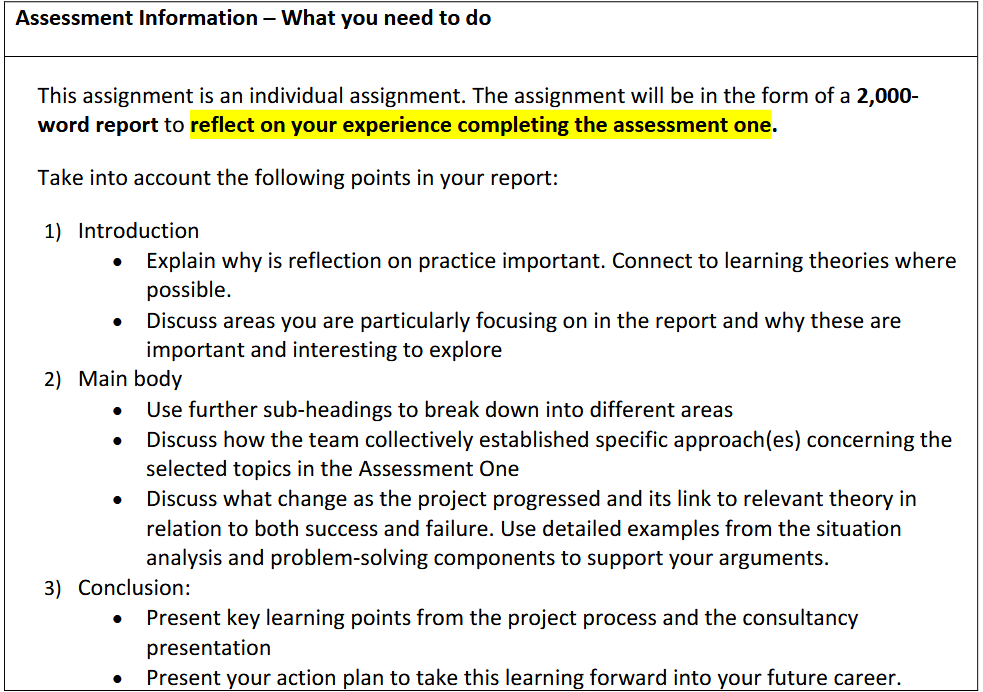
Despite surface differences, almost all UK assignments follow the same logical journey:
Introduction → Body → Conclusion
Sounds basic. It isn’t.
Introduction: How to Start Without Losing Marks
Your introduction isn’t there to impress. It’s there to orient the marker.
A strong UK introduction does four things only:
1. Context
Briefly explain the topic and its academic relevance.
2. Focus
State clearly what the assignment will examine.
3. Scope
Clarify what’s included and what’s excluded.
4. Structure
Signpost the sections that follow.
No quotes.
No storytelling.
No “since the beginning of time”.
Markers reward introductions that get to the point quickly and accurately.
Body Paragraphs: The PEEL Method (Use It or Lose Marks)
UK academic writing lives and dies by paragraph quality.
Every paragraph should follow PEEL.
Point – What are you arguing here?
Evidence – Which source supports this?
Explain – Why does this evidence matter?
Link – How does this answer the question?
If any one of these is missing, the paragraph weakens.
This is where assignment help for students usually focuses, because poor paragraph control is the biggest silent grade-killer.
Evidence Use: What UK Markers Expect
Evidence isn’t decoration. It’s proof.
Markers want to see:
-
Recent academic sources
-
Clear integration into your argument
-
Explanation, not dumping
One strong source explained well is better than five dropped in without analysis.
Conclusion: The “No New Information” Rule
Read this carefully.
Your conclusion must introduce zero new ideas.
Zero.
A UK conclusion should:
-
Summarise your main arguments
-
Answer the question directly
-
Offer a final judgement
That’s it.
Adding new theories or references here signals poor planning. Markers penalise it every time.
Standard Essay vs Academic Report (Quick Comparison)
| Feature | Standard Essay | Academic Report |
|---|---|---|
| Purpose | Argument and evaluation | Information and findings |
| Tone | Formal, analytical | Formal, objective |
| Structure | Continuous paragraphs | Sectioned with headings |
| Voice | Analytical | Impersonal |
| Use of data | Integrated into argument | Presented in findings |
Submitting an essay when a report is required puts a ceiling on your grade.

How to write a report (The Practical Breakdown)
Reports often feel more intimidating than essays because they look rigid and formal. In reality, that structure is what makes them easier to write and easier to mark. Unlike essays, where arguments flow across paragraphs, a report breaks your work into clear sections. Each section has one specific purpose, and if you stick to that purpose, you’re already doing what UK markers want.
Below is a practical breakdown of each section in a standard UK academic report and what it should actually contain.
Title Page
The title page sets the professional tone. It usually includes the report title, module name, module code, student number, and submission date. The title should be clear and descriptive, showing exactly what the report is about. This isn’t a place to be creative; clarity matters more than style.
Introduction
The introduction explains what the report is about and why it exists. You should briefly outline the topic, the aim of the report, and its scope. This is where you tell the reader what the report will cover and, just as importantly, what it won’t. Unlike an essay introduction, you don’t argue here—you orient the reader.
Methodology (if required)
This section explains how the information was gathered. You might describe surveys, experiments, case studies, or secondary data sources. The key is transparency. The marker should understand your process well enough to judge whether it was appropriate. No results here—just the method.
Findings
The findings section presents the results only. This could be data, themes, patterns, or observations. You don’t explain why the results matter yet; you simply show what you found. Tables, charts, and figures are common here, but they must be clearly labelled and referenced in the text.
Discussion
This is where you interpret the findings. You explain what the results mean, link them back to the report’s aim, and connect them to academic literature. This section is often where marks are won or lost, because it shows your ability to analyse rather than describe.
Conclusion
The conclusion summarises the key findings and discussion points. It should directly reflect the aim stated in the introduction. No new data or references should appear here. Think of this as closing the loop—showing that the report has answered its original purpose.
Recommendations (if asked)
Not all reports need recommendations, but if they’re requested, they must be practical and based on the findings. Each recommendation should clearly follow from the evidence presented earlier. Random or unrealistic suggestions are a common reason for mark deductions.
References
Every source cited in the report must appear in the reference list, formatted exactly to the required referencing style. Consistency matters more than perfection here.
Appendices (optional)
Appendices hold supporting material that would clutter the main report, such as raw data or extended tables. They support your work but are not essential to understanding it.
If you’re unsure about layout or level of detail, download the Sample Solved Report from the Academic Universe, which is the safest model to follow. Copy the structure, not the wording.
Writing a report example (What Markers Scan For)
Markers don’t read reports word for word. They scan for:
-
Clear section headings
-
Logical flow between sections
-
Evidence-based claims
-
Recommendations linked to findings
This is why our professional University assignment writing service support often focuses on structure and presentation, not just content.
Academic report example for students (Common Errors)
Students lose marks by:
-
Mixing discussion into findings
-
Writing opinions in data sections
-
Forgetting to reference tables
-
Ignoring formatting guidelines
A good report is clear, predictable, and slightly boring. Boring is safe. Safe gets marks.
The Pre-Submission Audit 📋
Before you submit anything, run this list.
✅ Question fully answered
✅ Correct structure (essay or report)
✅ Word count within limits
✅ Academic tone throughout
✅ Consistent referencing style
✅ Clear paragraph logic
✅ Proofread carefully
This ten-minute check regularly adds whole grade bands.
Pro-Tip 💡 Dealing With University-Specific Rules
Some universities are stricter than others.
For example:
-
University of Reading places heavy emphasis on report structure
-
Brock University expects tight control of argument in essays
Always check:
-
Module handbooks
-
Marking rubrics
-
Sample assignments
At postgraduate level, this precision matters even more. That’s why masters assignment help often focuses on compliance as much as content.
Why Go to University Essay Topics Still Matter
Many students assume that “why go to university” essays or personal statements only matter at the application stage. Once they’re enrolled, these early writing tasks are often forgotten. In reality, they play a much bigger role than most students realise. These essays are often the first time universities assess how you think, not just what you know.
At this stage, assessors aren’t expecting advanced academic theory. What they are looking for is clear thinking, logical structure, and evidence of reflection. These are the same skills that later determine whether your assignments sit at a pass, merit, or distinction level.
Clear thinking is about focus. A strong “why go to university” essay doesn’t try to say everything. It identifies a clear motivation, explains it directly, and avoids drifting into unrelated life stories. This ability to stay on topic is exactly what markers look for in first-year essays and beyond. Students who struggle later often show the same issue early on: they write a lot, but they don’t answer the question.
Logical structure matters just as much as content. Even at application level, assessors prefer writing that follows a recognisable pattern: introduction, development, and conclusion. When ideas are ordered logically, the reader doesn’t have to work to understand your point. This mirrors the standard UK assignment structure used throughout undergraduate and postgraduate study. Students who learn to structure ideas early adapt faster to academic writing expectations once coursework begins.
Evidence of reflection is the third key element. Universities want to see that you can think critically about your own experiences, choices, and goals. This doesn’t mean listing achievements. It means explaining why an experience mattered and how it shaped your decision to study. That reflective skill later becomes critical analysis in essays and evaluations in reports. The habit starts here.
Learning this academic template early pays off long after the application is accepted. Students who understand structure, clarity, and reflection from the start tend to adjust more easily to academic marking criteria. They’re less likely to panic over essay briefs, less likely to lose marks for poor organisation, and more confident when responding to feedback.
In short, “why go to university” essay topics still matter because they train the same skills that underpin every assessed piece of work. They shape how assessors perceive your thinking before you ever sit in a lecture hall. Mastering these fundamentals early doesn’t just get you into university—it gives you a head start once you’re there.

Where Academic Universe Comes In (Without the Hard Sell)
Sometimes, you don’t need advice.
You need backup.
Academic Universe supports students with:
-
University essay writing help
-
Masters assignment help
-
Structural editing and clarity checks
-
Referencing corrections
-
AI and plagiarism checks
-
Editing and AI-removal services
You keep your ideas. We refine the structure, flow, and academic tone.
Students often start at the main site:
👉 https://academicuniverse.co.uk/
Then move into targeted support when deadlines tighten and marks matter.
Final Thoughts (And Your Next Move)
UK academic writing isn’t about sounding clever. It’s about being clear, structured, and disciplined.
Once you master:
-
A focused introduction
-
Controlled body paragraphs
-
A clean conclusion
You stop panicking at 3:00 AM.
If you want a final polish, structural review, or professional academic edit, reach out to Academic Universe via WhatsApp through the site and get your work submission-ready.
Because stress is optional.
Structure isn’t. 🎓